Corinth
A Roman colony in the province of Achaia, on the narrow Isthmus between two seas, where Paul stayed a year and six months and later wrote to the church.
Region
- AchaiaRoman province
Verses
Verses: 2 Cor 1:1; Acts 18:12
Overview
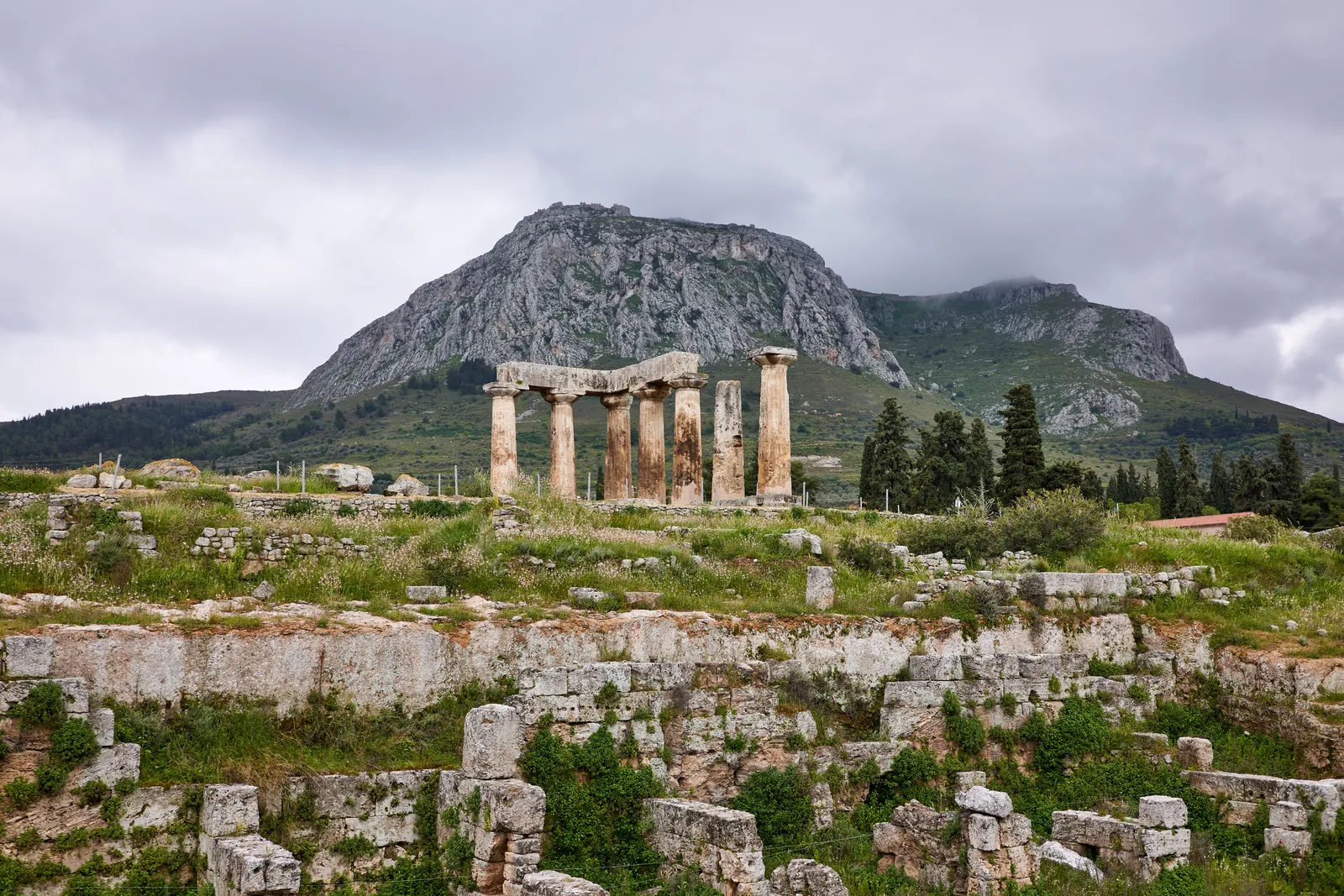
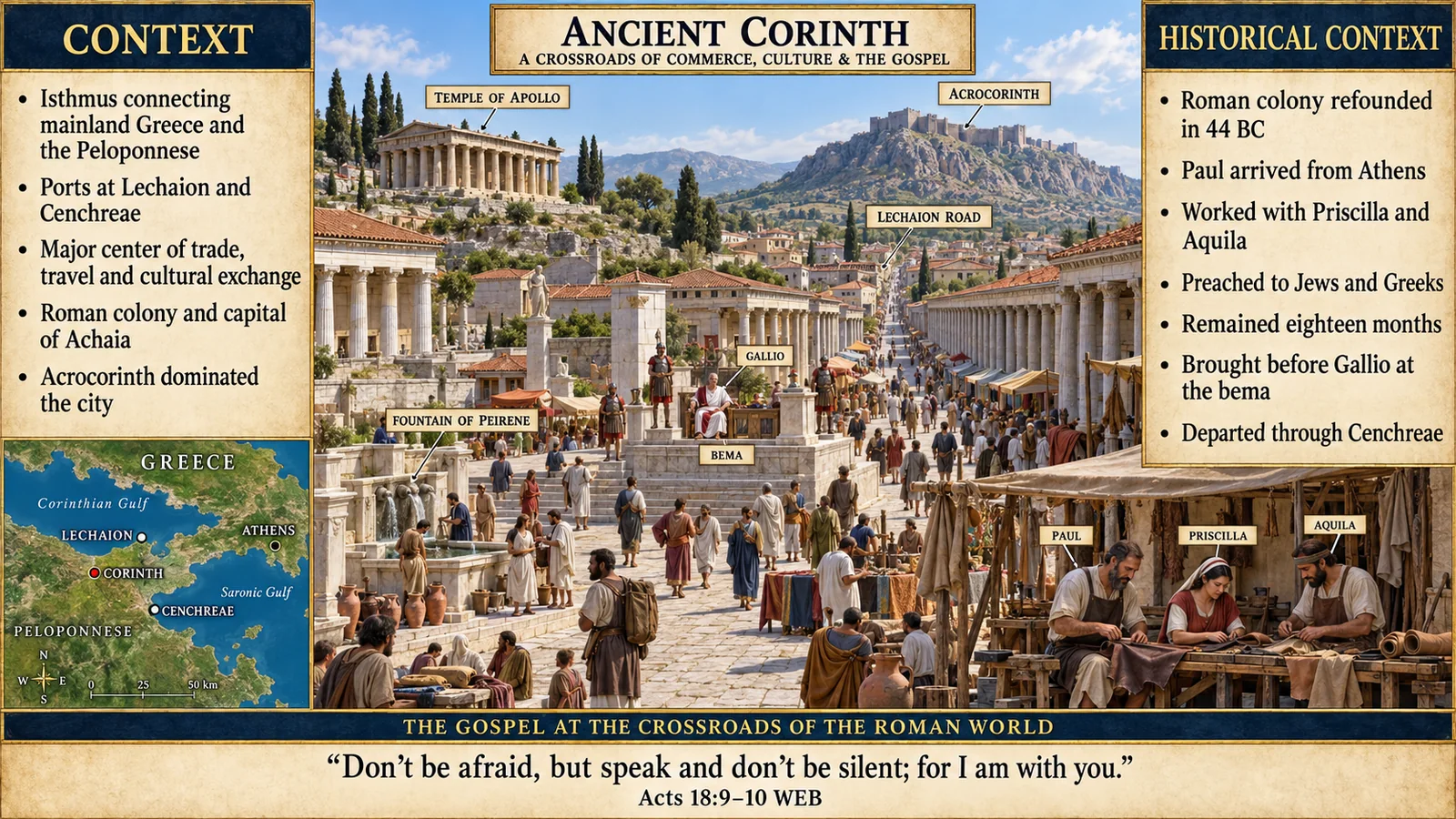
Corinth sat on the Isthmus, the narrow neck of land that joins mainland Greece to the Peloponnese. It had two harbors: Lechaion on the Corinthian Gulf, facing west toward Italy, and Cenchreae on the Saronic Gulf, facing east toward Asia. Strabo says the city grew wealthy from trade because it controlled both. [1]
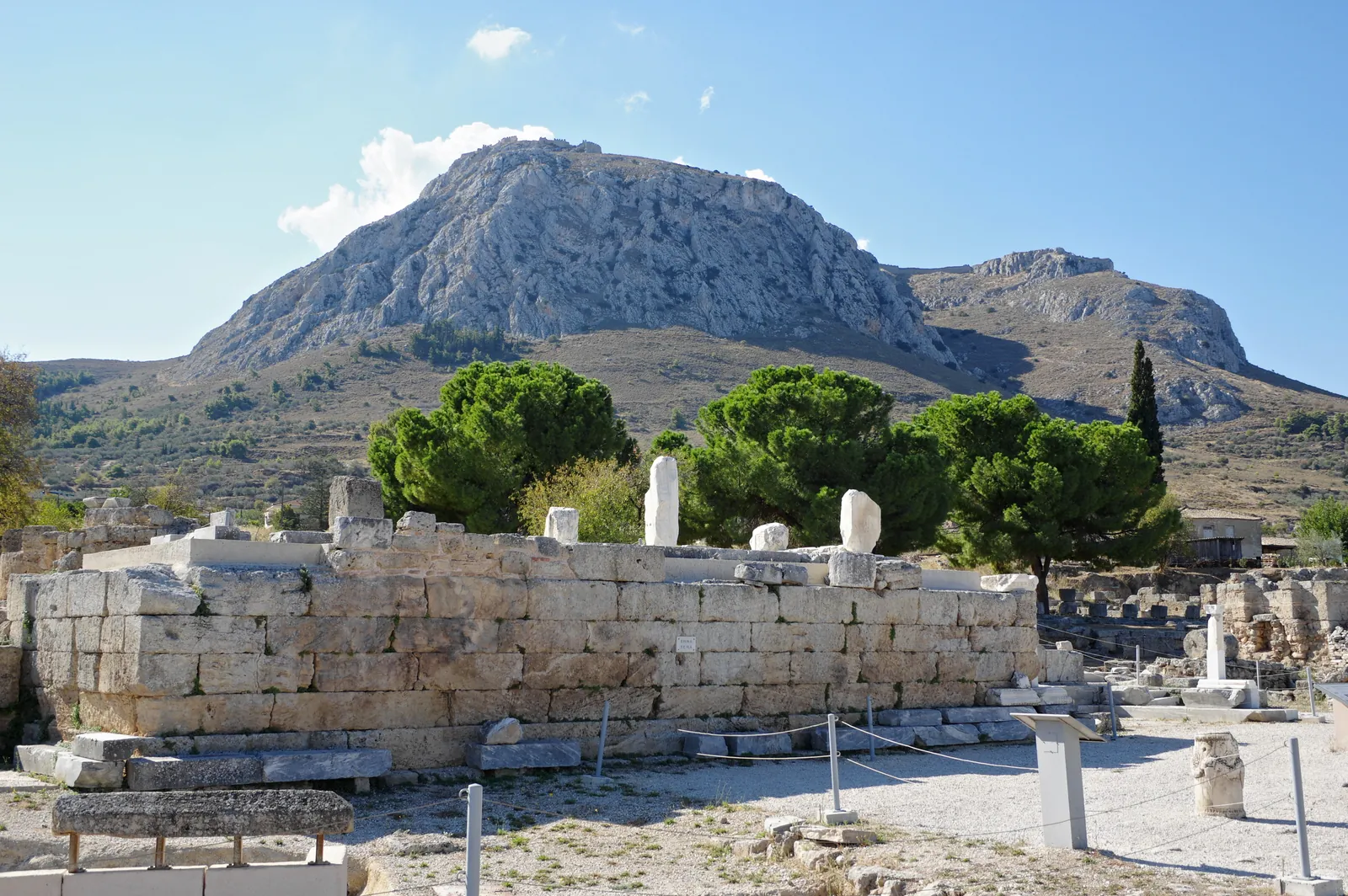
A tall, steep rock called the Acrocorinth rises behind the city. In Paul’s day Corinth was a Roman colony, and Acts and 2 Corinthians place it in the province of Achaia (Acts 18:12; 2 Corinthians 1:1). [2][3]
Paul lived and taught in Corinth for “a year and six months” (Acts 18:11). Two of his letters to the church there are in the New Testament: 1 and 2 Corinthians. They show a young church in a busy city, arguing over leaders (1 Corinthians 1:12) and learning what following Christ meant in everyday life.
Corinth in the Bible
Paul came to Corinth from Athens (Acts 18:1). There he met Aquila and his wife Priscilla, Jews who had recently come from Italy because Emperor Claudius had ordered all Jews to leave Rome (Acts 18:2). Paul stayed and worked with them, “for by trade they were tent makers” (Acts 18:3).
Every Sabbath Paul reasoned in the synagogue (Acts 18:4). When some opposed him, he moved next door, to the house of Justus, a man who worshiped God (Acts 18:6–7). Crispus, the ruler of the synagogue, “believed in the Lord with all his house” (Acts 18:8).
One night the Lord spoke to Paul in a vision: “Don’t be afraid, but speak and don’t be silent” (Acts 18:9). Paul stayed “a year and six months, teaching the word of God among them” (Acts 18:11).
While Gallio was proconsul of Achaia, Paul’s opponents among the Jews brought him before the judgment seat. Gallio refused to judge the case. He called it “questions about words and names and your own law” and drove them away (Acts 18:12–16). Then the Greeks seized Sosthenes, the ruler of the synagogue, and beat him in front of the judgment seat (Acts 18:17). Acts says Paul was brought before the seat. It does not say he preached from it.
Paul stayed many more days and then sailed for Syria with Priscilla and Aquila (Acts 18:18). Later, while Paul traveled to Ephesus, Apollos was at Corinth (Acts 19:1). Paul described their work this way: “I planted. Apollos watered. But God gave the increase.” (1 Corinthians 3:6).
Paul wrote 1 Corinthians “to the assembly of God which is at Corinth” (1 Corinthians 1:2) while he was in Ephesus: “I will stay at Ephesus until Pentecost” (1 Corinthians 16:8). 2 Corinthians goes to the same church, “with all the saints who are in the whole of Achaia” (2 Corinthians 1:1).
In Romans 16, Paul commends Phoebe, “a servant of the assembly that is at Cenchreae” (Romans 16:1). Cenchreae was Corinth’s eastern harbor. He also passes on greetings from Gaius, his host, and from “Erastus, the treasurer of the city” (Romans 16:23). Romans does not name the city. [1]
- The text says
Paul comes to Corinth from Athens, works with Aquila and Priscilla, and stays a year and six months. He is brought before the proconsul Gallio. He later writes letters to the church there.Acts 18:1–18; 1 Cor 1:2; 2 Cor 1:1
- The text says
Paul greets the Romans from people with him, including Gaius and Erastus.Rom 16:23
A Greek city rebuilt by Rome
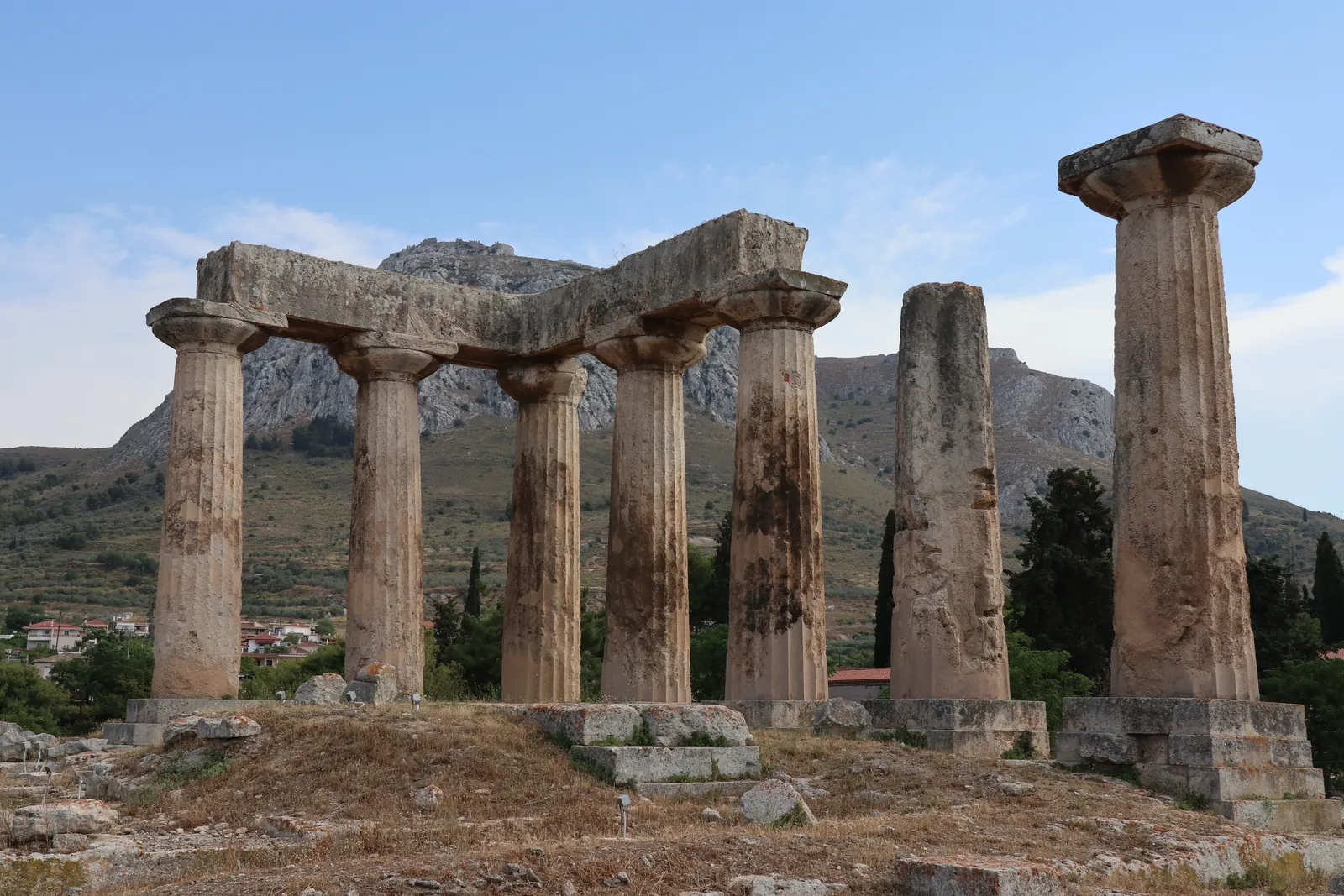
Corinth was an old and powerful Greek city long before Paul. Its Temple of Apollo was built in the 500s BC, and seven of its columns still stand. [4]
In 146 BC a Roman army under Lucius Mummius destroyed the city. Both Strabo and Pausanias describe it being laid waste. [1][2][3]
In 44 BC Julius Caesar founded a Roman colony on the site, called Laus Julia Corinthiensis. Strabo says most of the new settlers were freed slaves. Pausanias says the new city was settled by colonists from Rome, not by the old Corinthians. So the Corinth Paul knew was a Roman city less than a hundred years old, built on the ruins of a Greek one. [3][1][2]
Strabo also describes the sanctuary of Poseidon on the Isthmus, in a grove of pine trees, where the Isthmian Games were held. [1]
Two seas and the Isthmus
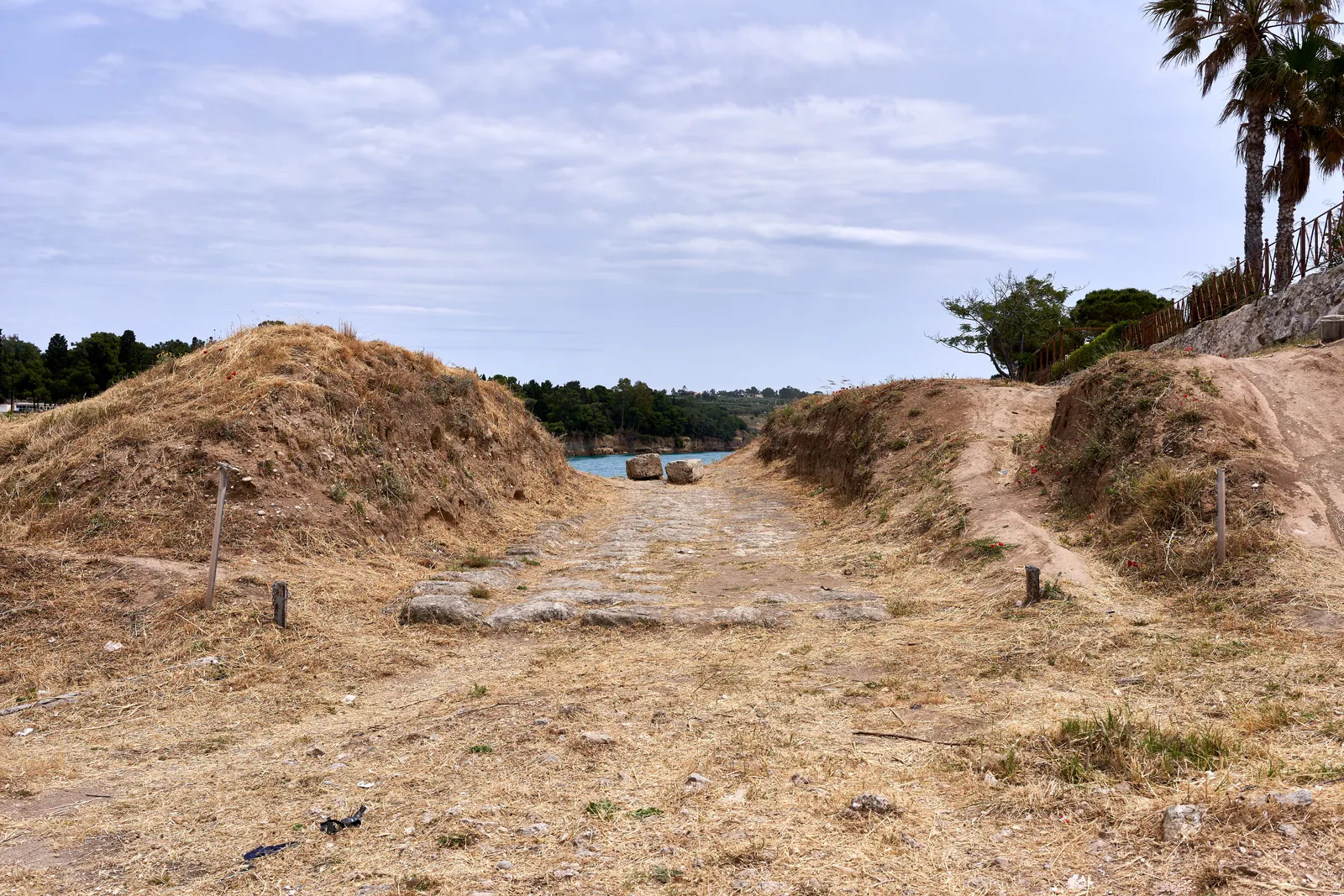
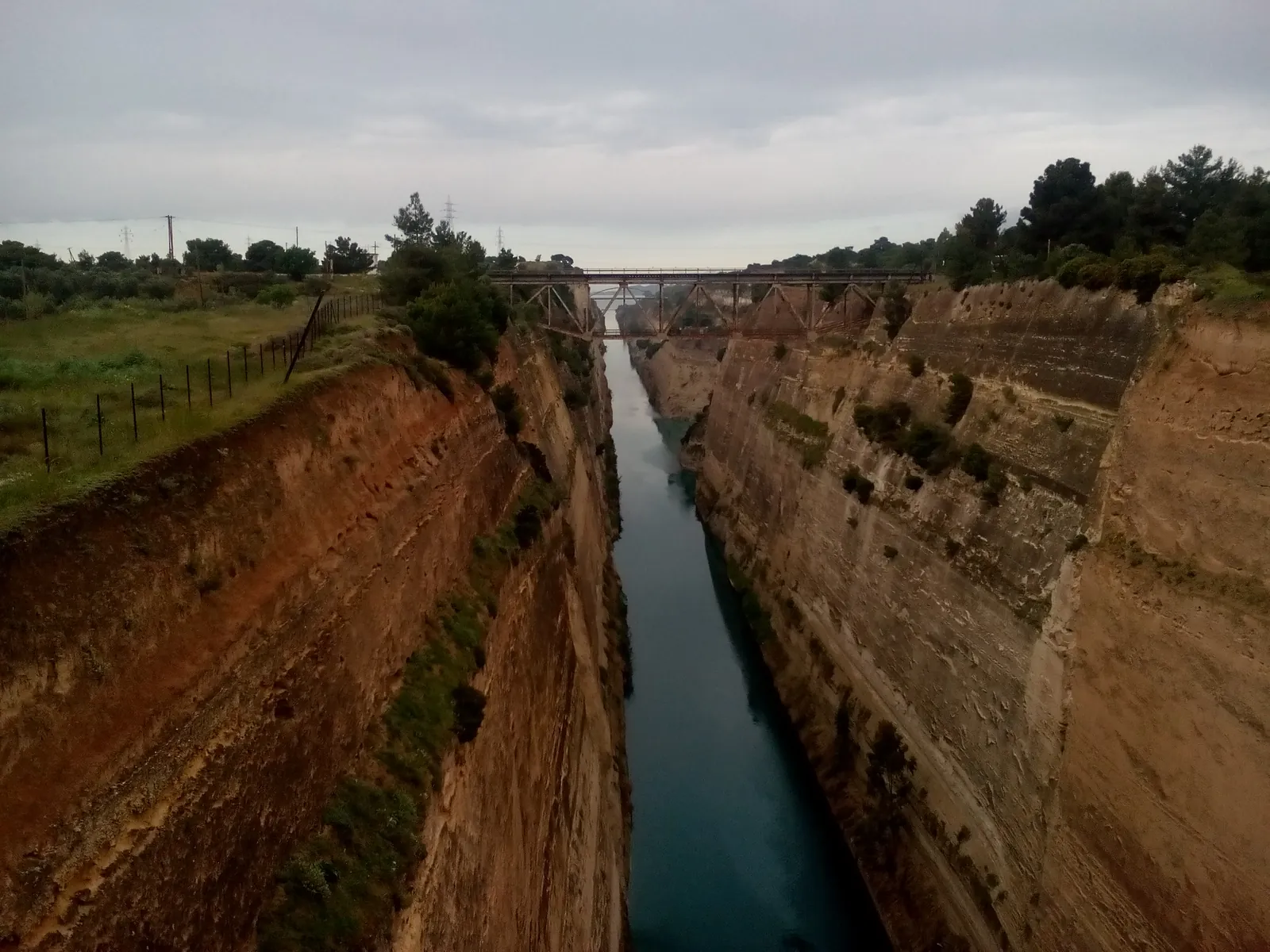
A paved track called the Diolkos was used to drag ships over land across the Isthmus, between the Corinthian and Saronic gulfs. Excavations from 1956 to 1962 uncovered it. Scholars place its building in the late 600s or early 500s BC, but that date is worked out from pottery and from letters cut in the stones, not from any ancient writer, so it is debated. When it stopped being used is also debated. [5]
Rulers also tried to cut a canal. Pliny the Elder lists several who attempted it, among them Julius Caesar, the emperor Gaius and Nero. Suetonius says Nero himself broke the first ground with a pick and carried off the first basket of earth. The work was never finished. The canal that crosses the Isthmus today was dug from 1882 to 1893. [6][7][8]
Temples and gods
Corinth had many shrines. Pausanias describes an image and sacred enclosure of Apollo near the spring of Peirene, temples of Zeus and of Asklepios, the god of healing, and a temple of Aphrodite on the top of the Acrocorinth. Strabo also mentions the small temple of Aphrodite on the summit, and excavators found its foundations in 1926. [2][1][9]
Acts and Paul’s letters to Corinth never name Apollo, Aphrodite or Poseidon. Paul speaks in general terms about sitting in “an idol’s temple” and eating food sacrificed to idols (1 Corinthians 8:10).
The judgment seat and the Gallio letter
In the forum, excavators found a raised marble platform on the upper terrace. The American School of Classical Studies at Athens, which has excavated Corinth since 1896, dates it to the middle of the 1st century AD. Its database says the platform is thought to match the judgment seat in Acts. Centuries later a church was built over it. [10][11]
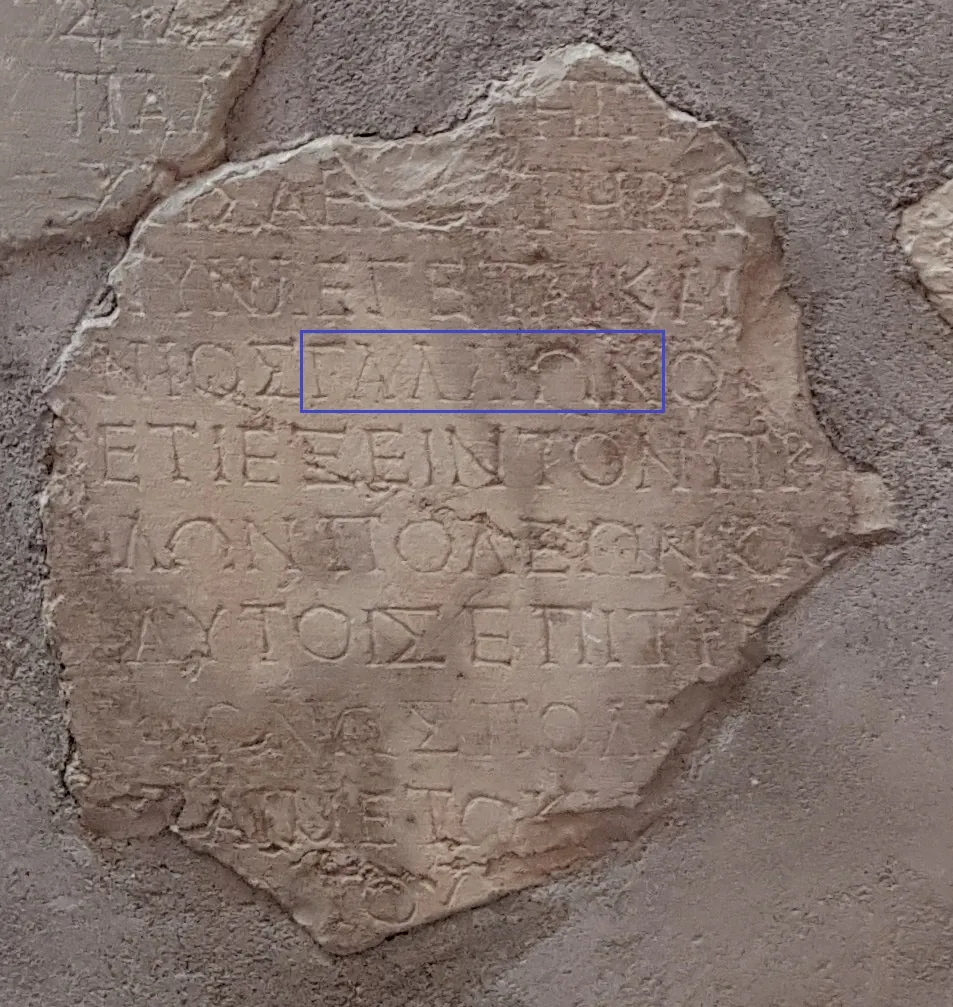
At Delphi, archaeologists found nine pieces of a letter from Emperor Claudius that names Gallio as proconsul. The letter itself can be dated to AD 52, because it counts how many times Claudius had been hailed as a victorious commander (26 times). From that, scholars work out that Gallio governed Achaia for about a year around AD 51–52. Some reference works give 52–53. [12]
- Outside evidence
A letter from Emperor Claudius, found at Delphi, names Gallio as governor of Achaia and dates his term to about AD 51–52. It doesn't mention Paul. Scholars use it to date Paul's time in Corinth to roughly AD 50–52. [12]Acts 18:12
- Debated
Excavators found a raised marble platform in Corinth's forum. It is thought to be the judgment seat in Acts 18:12–17, but that link is a tradition, not proven. [10]Acts 18:12–17
What scholars debate
Two finds from Corinth are often linked to the Bible. Here is what each one shows, and where scholars disagree.
- Debated
A paving stone near the theater names an Erastus who paid for the pavement in return for his office as aedile, a city official. He is likely the Erastus Paul names in Romans 16:23, but this is not proven. The pavement was reused, so the stone is not where it was first laid, and scholars disagree on its date: some put it in the middle of the 1st century AD, others in the 2nd century, in Hadrian’s time. Paul’s Greek word for Erastus’s job is oikonomos. The WEB translates it ‘treasurer’ and the KJV ‘chamberlain’, and scholars debate whether it matches the Latin title aedile. [13] [14] [15]Rom 16:23
- Debated
An Erastus also appears in Acts 19:22 and in 2 Timothy 4:20, where he “remained at Corinth.” Scholars debate who wrote 2 Timothy, and the texts never say these are all the same man.Acts 19:22; 2 Tim 4:20
- Debated
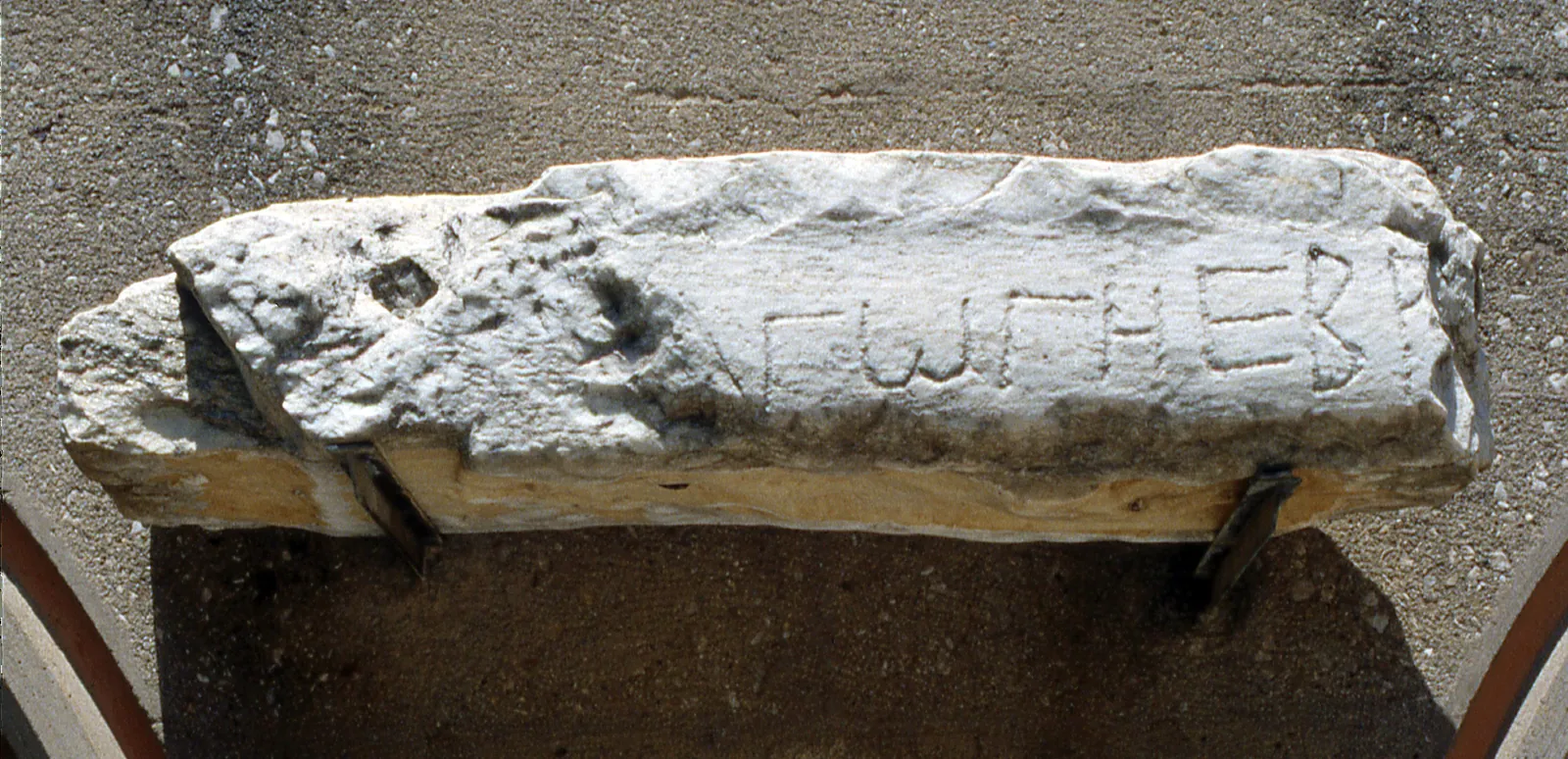
A marble lintel found in Corinth reads ‘synagogue of the Hebrews’ in Greek. It is usually dated later than Paul’s time, so it cannot be tied to the synagogue in Acts 18:4. [16]Acts 18:4
- Debated
A common claim says Corinth’s temple of Aphrodite had a thousand temple prostitutes. It rests on one sentence in the Greek writer Strabo, from about AD 20. Writing in the past tense, he said the temple ‘owned more than a thousand temple slaves, courtesans.’ Many scholars hold that he meant the old Greek city that Rome destroyed in 146 BC, not the Roman city of Paul’s day. Some scholars doubt that temple prostitution existed anywhere at all, and others dispute that view. [1] [19] [20]
What you can see today
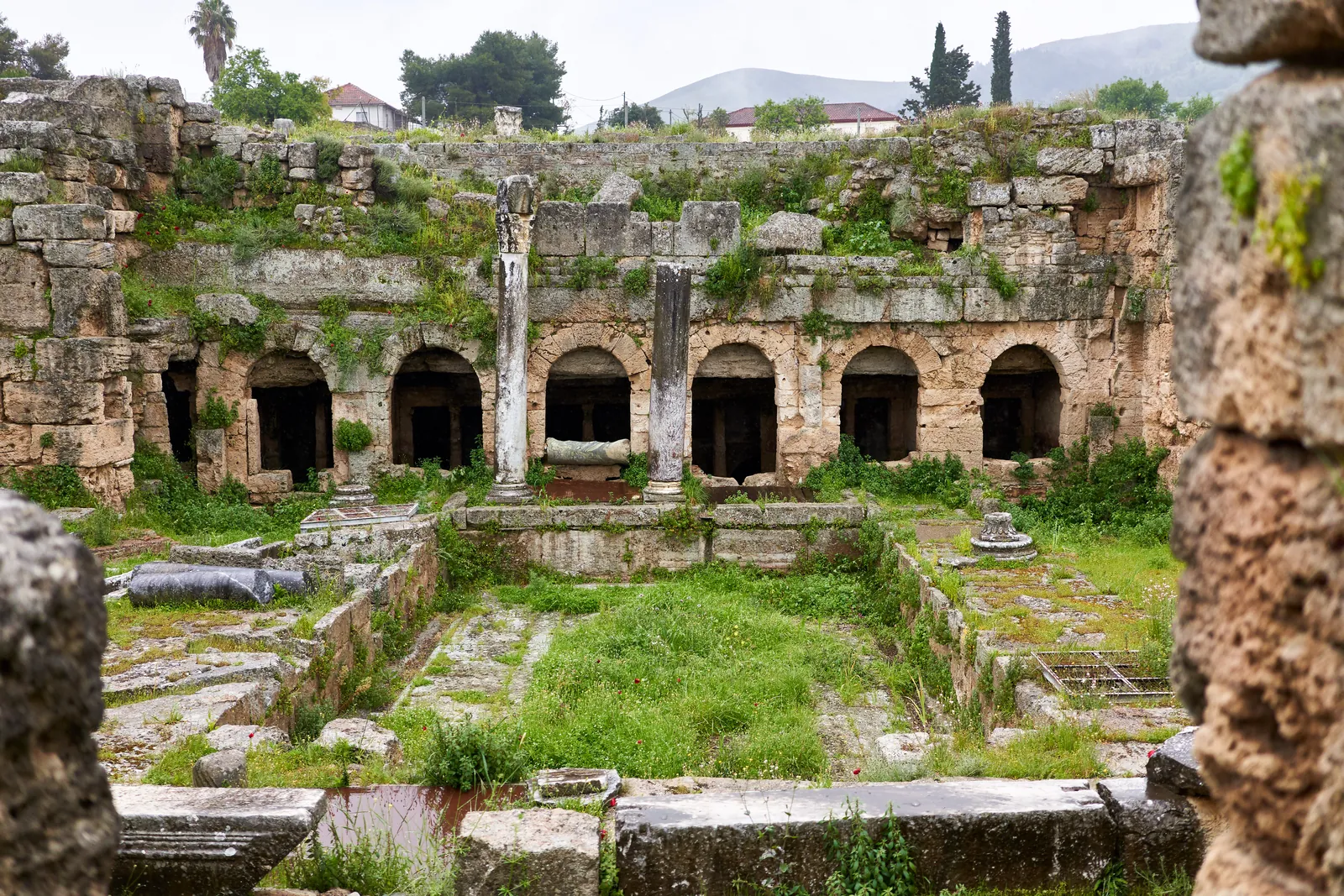
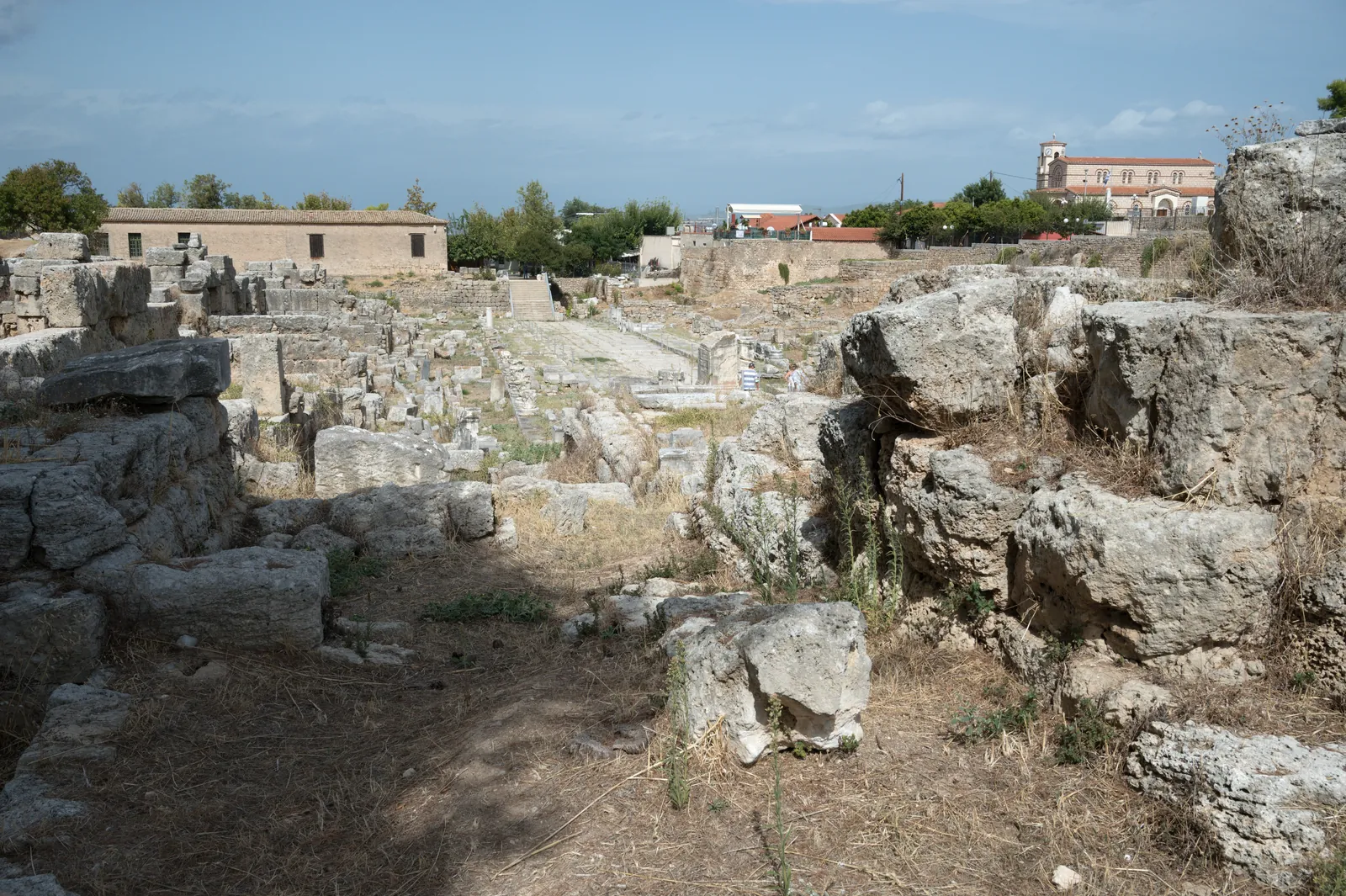
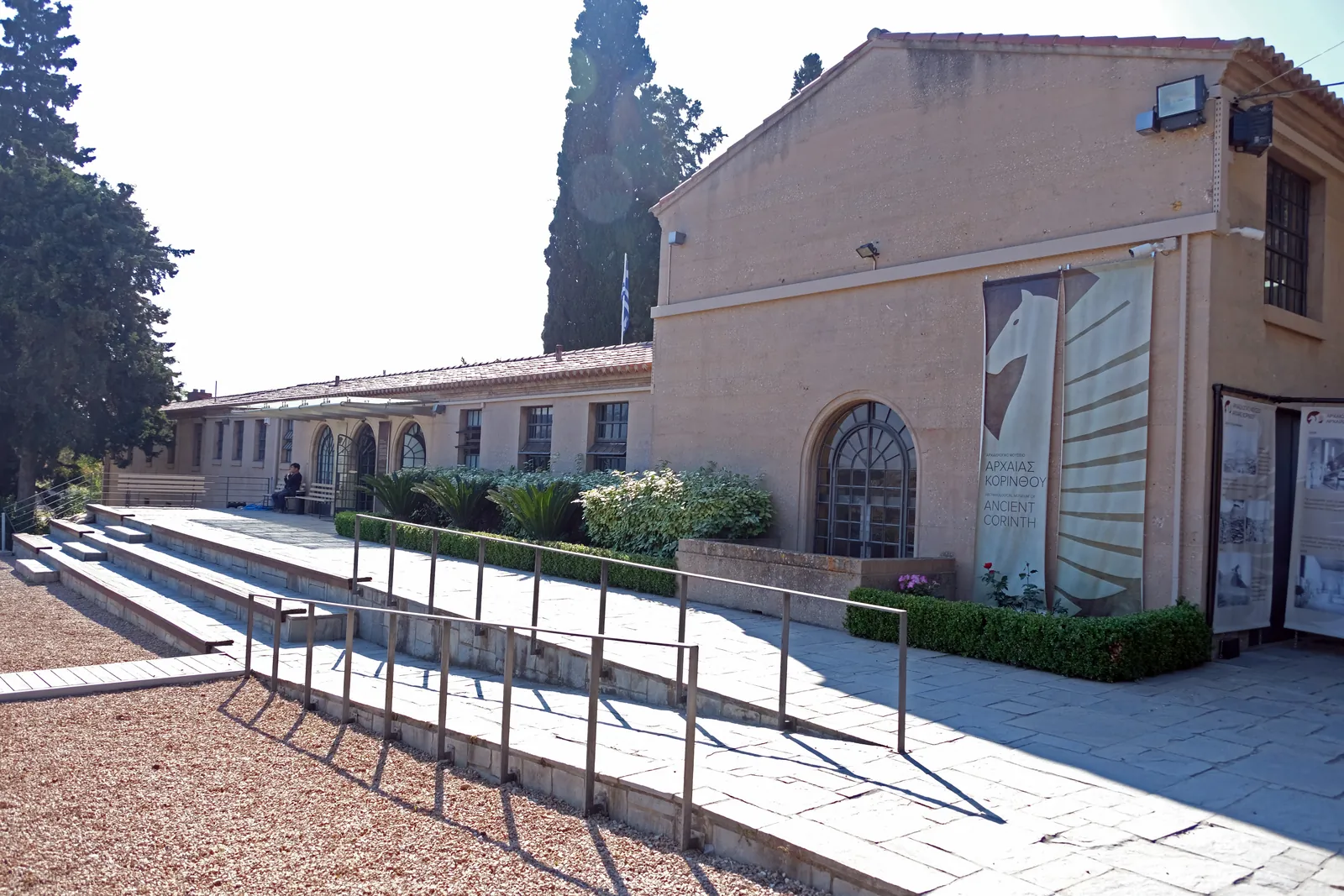
Visitors to Ancient Corinth can walk the forum and see the Bema, the Lechaion Road, the fountain of Peirene and the Temple of Apollo, with finds from the excavations in the site museum. The Acrocorinth, the Diolkos and the modern canal are nearby. Opening hours and access change, so check before you go. [11]
Peirene was the city’s famous spring. Pausanias says it was decorated with white marble. The Greek fountain house was rebuilt in Roman times. Its marble court was once credited to Herodes Atticus, but Betsey Robinson’s study dates it to the 300s AD. [2][17][18]
People in Corinth’s story
Paul; Aquila and Priscilla (Acts 18:2); Justus (Acts 18:7); Crispus (Acts 18:8); Gallio (Acts 18:12); Sosthenes (Acts 18:17); Apollos (Acts 19:1); Phoebe of Cenchreae (Romans 16:1); Gaius and Erastus (Romans 16:23).
Books
Related
Sources
The numbers in the text point here. Bible quotations are from the World English Bible on this site. Photo credits and licenses are on the Image credits page.
- Strabo, Geography 8.6.20–23. Loeb Classical Library, vol. 4 (1927).
- Pausanias, Description of Greece 2.1–2.5, translated by W. H. S. Jones.
- American School of Classical Studies at Athens (ASCSA), Ancient Corinth excavations, History/Timeline (146 BC sack by Mummius; 44 BC colony of Laus Julia Corinthiensis).
- Herbst, Sanders, Palinkas and Tzonou-Herbst, Ancient Corinth: Site Guide, 7th ed. (ASCSA, 2018).
- N. M. Verdelis, excavations of the Diolkos (1956–1962); Raepsaet and Tolley, Bulletin de correspondance hellénique 117 (1993) 233–261; Werner, International Journal of Nautical Archaeology 26.2 (1997) 98–119.
- Pliny the Elder, Natural History 4.10.
- Suetonius, Nero 19.2. Loeb Classical Library (1914).
- Corinth Canal S.A., history of the canal (work begun 1882, opened 1893).
- Blegen, Broneer, Stillwell and Bellinger, Corinth III.1: Acrocorinth, Excavations in 1926 (1930).
- ASCSA, Corinth Excavations database, entry “Bema.”
- ASCSA, Ancient Corinth: the excavations (since 1896).
- Bryan Windle, “Gallio: An Archaeological Biography,” Bible Archaeology Report (2019).
- J. H. Kent, Corinth VIII.3: The Inscriptions 1926–1950 (1966), no. 232 (the Erastus stone).
- John K. Goodrich, “Erastus of Corinth (Romans 16.23),” New Testament Studies 57.4 (2011) 583–593; and his review of Corinth in Context (2011).
- Steven J. Friesen, “The Wrong Erastus,” in Corinth in Context (Brill, 2010).
- Corinth VIII.1, Greek inscriptions, no. 111 (the ‘synagogue of the Hebrews’ lintel).
- ASCSA, Corinth Excavations database, entry “Peirene.”
- Betsey A. Robinson, Histories of Peirene (ASCSA, 2011), as reviewed by Julian Richard, American Journal of Archaeology 118.3 (2014).
- Marg Mowczko, “Aphrodite and Sacred Prostitution in Corinth” (article), with its list of ancient sources; it cites Jerome Murphy-O’Connor, St Paul’s Corinth (2002), p. 56, for the view that Strabo describes the city before 146 BC.
- Stephanie Budin, The Myth of Sacred Prostitution in Antiquity (Cambridge University Press, 2008); a disputed view, see the review in Bryn Mawr Classical Review 2009.04.28.