Return & Restoration
The return from exile under Persia, rebuilding the temple and Jerusalem’s walls, and the last Old Testament prophets.
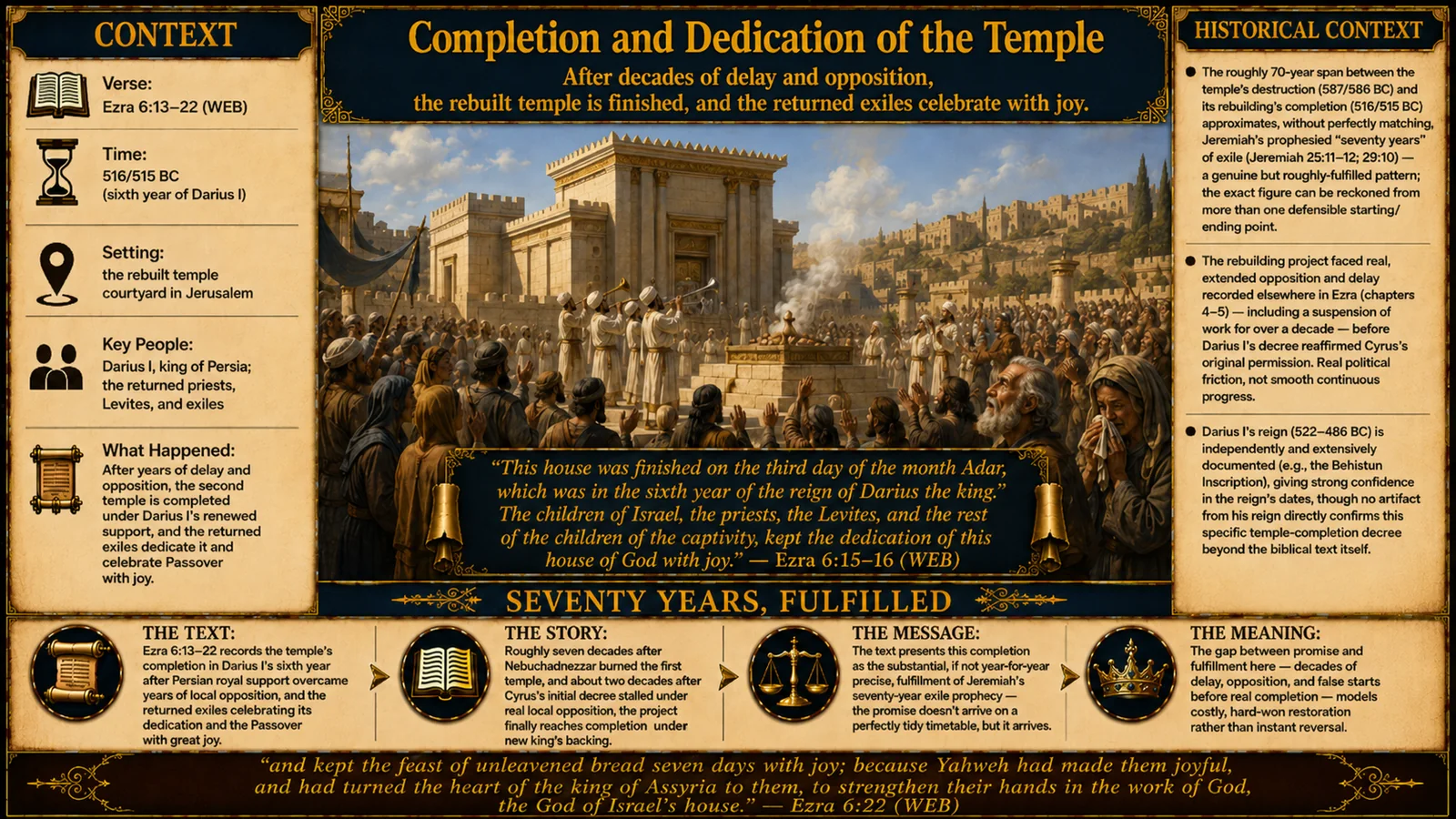
Empire in this era: Persia ruled the land from 539/538 BC until Alexander in 332 BC, and its kings Cyrus, Darius, Xerxes and Artaxerxes appear in Ezra, Nehemiah and Esther.
On the strip: Persia (539/538–332 BC). The strip shows who held the stage over the land of Israel, not who was biggest in the world.
What the sources say, and how sure we are
- The text says
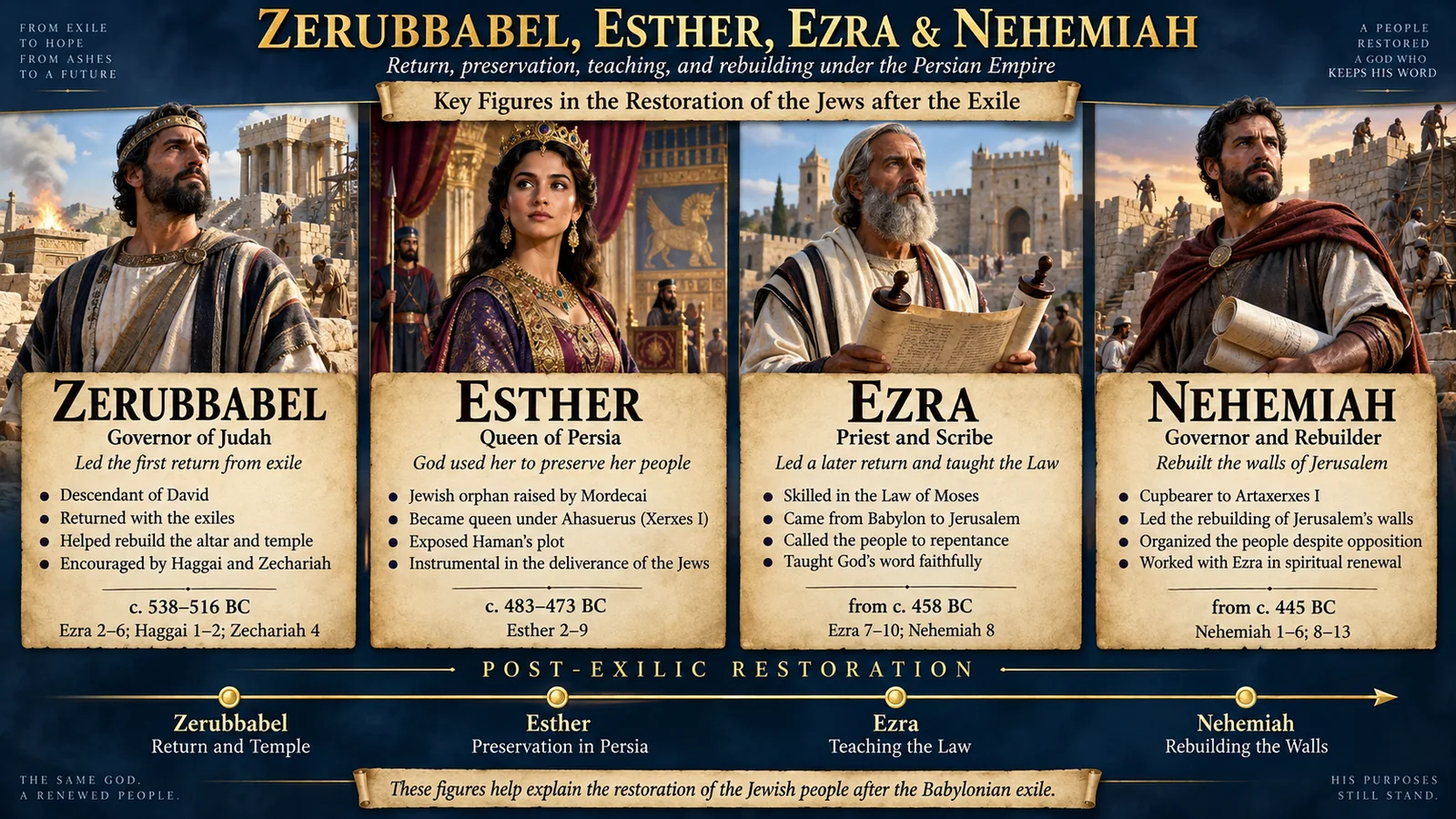
Cyrus of Persia lets exiles return in 538 BC. The temple is rebuilt and finished about 516 BC, and Ezra and Nehemiah later lead further reforms.Ezra 1:1–4; Ezra 6:15; Neh 2:1; Neh 6:15
- The text says
Later Persian kings, including Darius, Ahasuerus (Xerxes), and Artaxerxes, appear in Ezra, Nehemiah, and Esther.Ezra 6:1–15; Neh 2:1; Esth 1:1
- Outside evidence
The Cyrus Cylinder shows Persia’s policy of returning displaced peoples. Letters from Elephantine in Egypt, from 407 BC, mention the governor of Judah and Sanballat of Samaria.Cyrus Cylinder; Elephantine Papyri
- Debated
The Cyrus Cylinder does not mention the Jews. Scholars debate how far it parallels the decree in Ezra.Ezra 1:1–4
- Debated
Scholars differ on the order of Ezra’s and Nehemiah’s missions.Ezra 7:7
- Christian conclusion
The New Testament identifies the promised messenger and the coming of Elijah with John the Baptist.Mal 3:1; Mal 4:5; Mark 1:2; Matt 11:10–14