United Monarchy
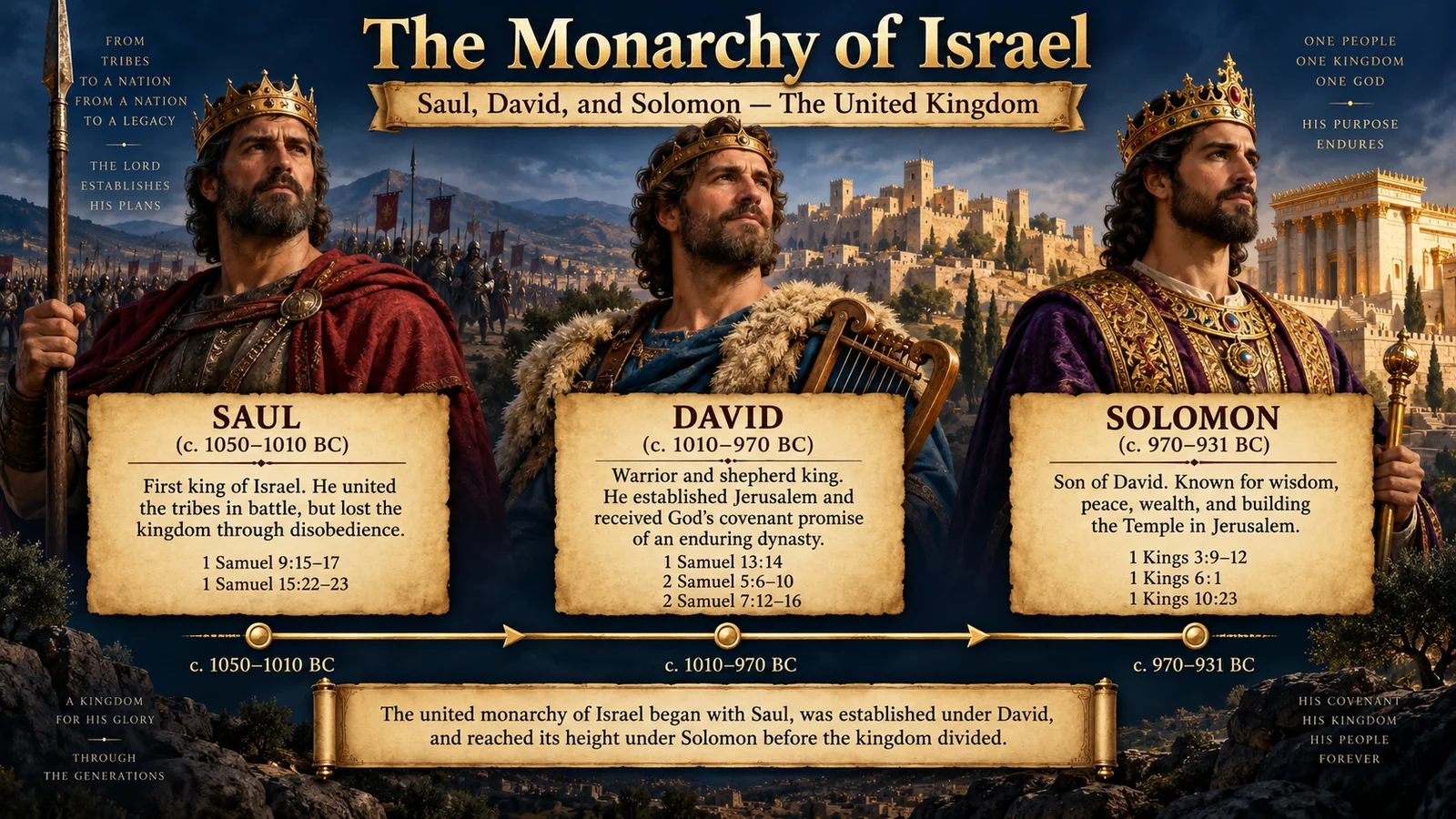
Samuel, Saul, David, Solomon, Jerusalem, the temple, and the promise of a lasting dynasty.
Empire in this era: No empire held the stage in this era: Egypt had left Canaan, and Assyria was weak and busy with the Arameans, so David and Solomon ruled in a gap until Egypt’s Shishak raided about 925 BC.
On the strip: No empire. The strip shows who held the stage over the land of Israel, not who was biggest in the world.
What the sources say, and how sure we are
- The text says
Israel asks for a king, and Saul reigns first. David follows, makes Jerusalem his capital, and receives God’s promise of a lasting dynasty. Solomon builds the temple.1 Sam 8–10; 2 Sam 5:6–10; 2 Sam 7:12–16; 1 Kgs 6–8
- Outside evidence
The Tel Dan inscription from the 9th century BC refers to a “house of David.” An Egyptian relief at Karnak records the campaign of Pharaoh Shoshenq I, the “Shishak” of 1 Kings 14:25, shortly after Solomon’s reign.Tel Dan Stele; Karnak relief of Shoshenq I
- Debated
Scholars disagree about how large and organized David and Solomon’s kingdom was. Some argue from the text and from finds such as Khirbet Qeiyafa for a significant state. Others, using a lower dating of 10th-century buildings, argue for a smaller chiefdom.
- Christian conclusion
Christians read the promise to David as pointing to Jesus, the king from David’s line.Luke 1:32–33; Matt 1:1